Difference Between MCB and RCCB
Table of Contents
Electric shocks, short circuits, and overheating of electrical wiring are among the hazards that can threaten the safety of people and electrical equipment in buildings. But do you know the difference between a miniature circuit breaker (MCB) and a residual current circuit breaker (RCCB), and why is each one important? Despite their similar appearance, these two protective devices serve different purposes: one protects the circuit against overloads and short circuits, while the other detects current leakage to help reduce the risk of electric shock.
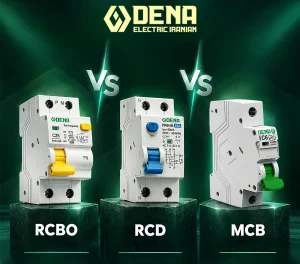
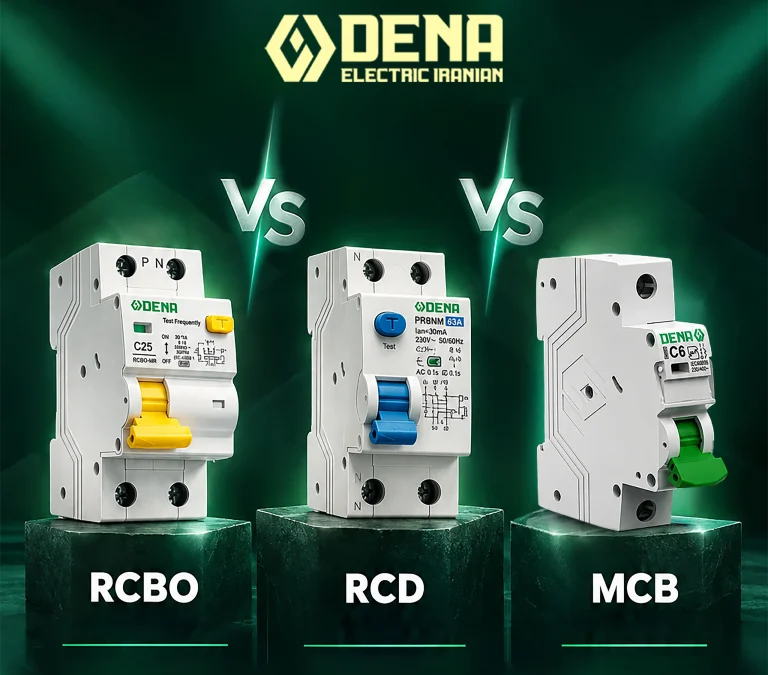
Alongside these two devices, there is also the residual current circuit breaker with overcurrent protection (RCBO), which provides both types of protection in a single device. In this article from Dena Electric, you will learn about the operating principles, applications, and differences of these three circuit breakers, helping you make a more informed choice to improve the safety of your building’s electrical system.
For free consultation and to purchase Dena Electric Iranian miniature circuit breakers (MCBs), call 09129584435. 📞
The difference between an MCB and an RCCB lies in the type of protection each provides. An RCCB detects current leakage by comparing the incoming and outgoing currents in a circuit. When a difference is detected, it quickly disconnects the circuit to help reduce the risk of electric shock. In contrast, an MCB is designed to protect the circuit against overloads and short circuits and cannot detect current leakage. Therefore, using an RCCB alongside an MCB provides more comprehensive protection against current leakage and electrical hazards.
To choose the right MCB, understanding the differences between Type B, C, and D miniature circuit breakers and their applications can help you select the appropriate protective equipment.
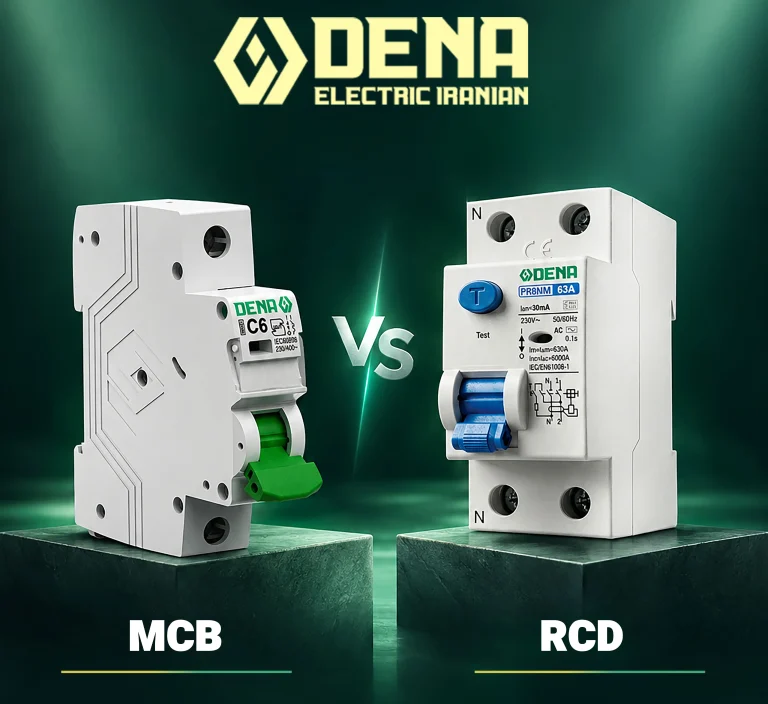
Imagine several electrical appliances connected to a circuit:
For example, if the current exceeds the permitted limit or a short circuit occurs, the wires may overheat and become damaged. An MCB disconnects the circuit to prevent this from happening.
At home, MCBs are used to protect circuits supplying sockets, lights, air conditioners, and other electrical appliances.
Now consider an RCCB. Suppose a wiring fault causes the metal casing of an electrical appliance to become live. If current leaks to earth through an unintended path, such as the metal casing, the RCCB can detect the leakage and disconnect the power. Its main purpose is to help reduce the risk of electric shock caused by current leakage.
For this reason, RCCBs are used in the electrical distribution boards of homes, buildings, and certain workplaces.
| Features | Miniature Circuit Breaker (MCB) | Residual Current Device (RCD/RCCB) | Residual Current Circuit Breaker with Overcurrent Protection (RCBO) |
|---|---|---|---|
| Main Function | Protection Against Overloads and Short Circuits | Leakage Current Detection | Protection Against Overloads, Short Circuits, and Current Leakage |
| Overload Protection | Yes | No | Yes |
| Short-Circuit Protection | Yes | No | Yes |
| Leakage Current Detection | No | Yes | Yes |
| Operating Mechanism | Thermal and Magnetic | Detection of Differences Between Input and Output Currents | Thermal, Magnetic, and Differential Current Detection |
| Main Application | Protection of Electrical Wiring and Circuits | Reducing the Risk of Electric Shock Caused by Current Leakage | Combination of Two Types of Protection in a Single Device |
| Applications | Building Electrical Panels, Lighting and Socket Circuits | Building Electrical Panels and Circuits Requiring Leakage Current Protection | Electrical Panels in Residential, Commercial, and Industrial Buildings |
Miniature Circuit Breaker (MCB – Miniature Circuit Breaker)
Function: A miniature circuit breaker (MCB) is a widely used protective device in electrical distribution systems. It protects circuits against overloads and short circuits. When the current flowing through a circuit exceeds the permitted limit, the breaker trips automatically and disconnects the power, preventing damage to wiring and electrical equipment. It primarily protects wiring and electrical equipment against thermal damage caused by excessive current.
Operating Mechanism: The breaker uses a thermal mechanism to trip during sustained overloads and a magnetic mechanism to disconnect the circuit in the event of a sudden short circuit.
Residual Current Circuit Breaker (RCCB)
Function: A residual current device (RCD), also known as an RCCB, is designed to detect current leakage and help reduce the risk of electric shock. It compares the current flowing through the live wire with the current returning through the neutral wire. Under normal conditions, these currents are balanced. However, if current leaks to earth or flows through an unintended path, a difference occurs between them, which the device can detect.
Operating Mechanism: The breaker monitors the balance between the live and neutral currents and disconnects the circuit when it detects a residual current.
Residual Current Circuit Breaker with Overcurrent Protection (RCBO)
Function: An RCBO combines the functions of a miniature circuit breaker (MCB) and a residual current circuit breaker (RCCB) in a single device. It protects the circuit against overcurrents and short circuits while also helping protect people against electric shock caused by current leakage.
Operating Mechanism: By combining thermal and magnetic mechanisms with a differential current transformer, the RCBO provides protection against overloads, short circuits, and current leakage.
For free consultation and to purchase Dena Electric Iranian RCCBs, call 09129584439. 📞
Ultimately, understanding the difference between a miniature circuit breaker (MCB) and a residual current circuit breaker (RCCB) is essential when selecting suitable electrical protection devices. An MCB protects circuits against overloads and short circuits, while an RCCB detects leakage currents to help reduce the risk of electric shock. A residual current circuit breaker with overcurrent protection (RCBO) combines both types of protection in a single device. The right choice should be based on the circuit conditions, technical specifications, and electrical safety requirements of the building.
Dena Electric offers a range of electrical protection devices to help you choose suitable products for greater safety and reliability in electrical distribution systems. To learn more about our products and access technical information, visit Dena Electric Products.

Educational Articles